

 People Are Quietly Canceling ChatGPT. We Found Out Why. People Are Quietly Canceling ChatGPT. We Found Out Why.
|
|
97% of Copilot Users Save Time. Only 3% Think It's Worth It.
|
|
ChatGPT's $200 Plan Has One Good Use Case. Maybe.
|
What else happened today?What AI tools should I be using?Good Morning Thorium Valley, welcome back to The Lab.
Today we're digging into a quiet wave of people canceling their chatbot subscription and switching to the competition.
We're also looking at an AI productivity tool baked into your work apps that saves almost everyone time but somehow almost nobody thinks is worth the money.
And we're testing whether paying $200 a month for a "research-grade" version of that same chatbot actually gets you anything the basic plan doesn't.
Quickly before we dive in — Be honest — how many AI tool free trials are you currently forgetting to cancel?
GENERAL
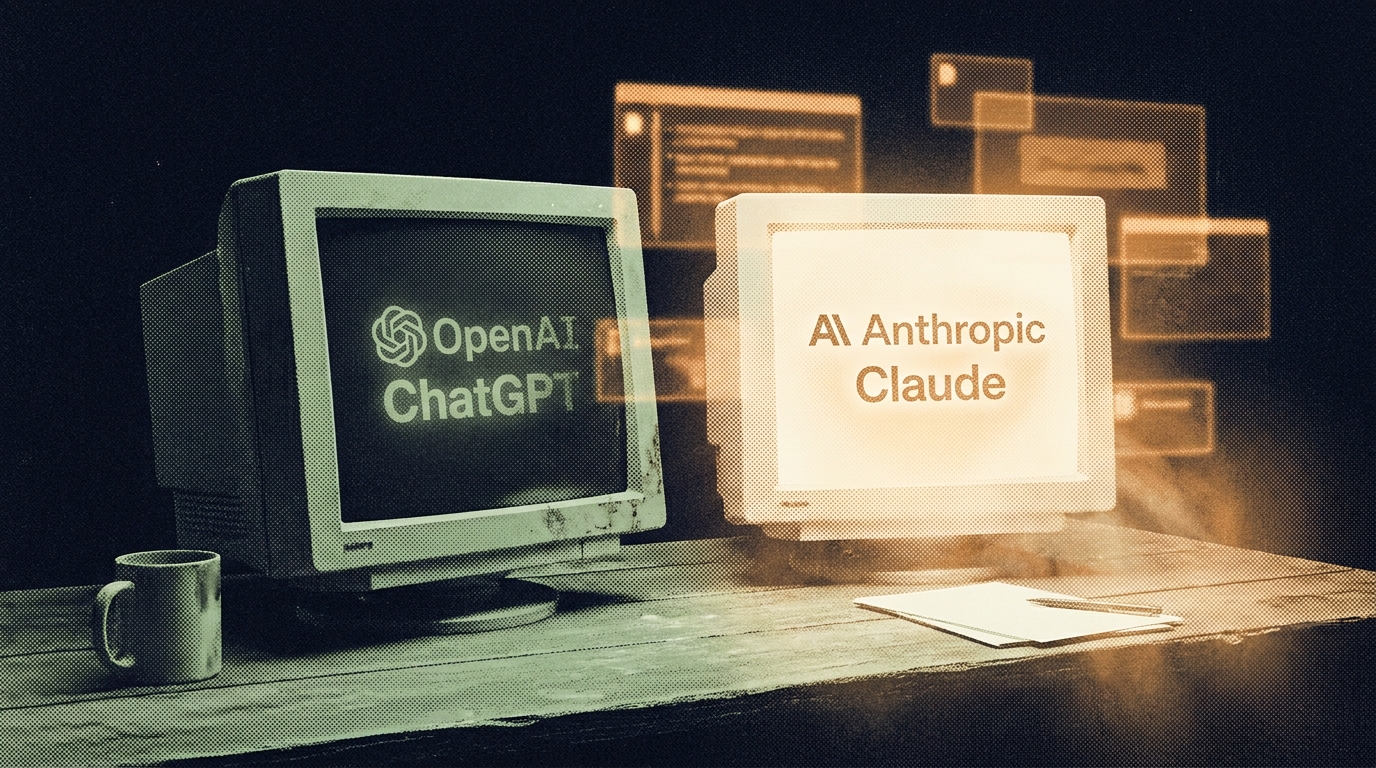
According to a Forbes analysis, ChatGPT's share of AI app downloads dropped from 67% to 47% in the past year. Claude went from 1% to 14%. That's not a rounding error — that's a migration. We dug into who's actually switching, what they found, and whether their $20 a month landed in the right place.
The pattern is consistent: users leave ChatGPT because the outputs start feeling templated. A German consultancy called Till Freitag documented their switch after 18 months with ChatGPT, citing Claude's writing quality, its ability to handle 80-page documents without losing the thread, and the fact that it actually sounds like a thinking partner instead of a customer service bot. Ezra Group, a wealth management firm, bought a company-wide ChatGPT license only to discover most of the team was spending their day in Claude instead. Their CEO built two working AI agents with Claude in about six hours after days of getting nowhere with ChatGPT and Gemini.
The switchers who stayed tend to love the same things:
+ Claude asks clarifying questions instead of confidently making stuff up
+ Its large context window lets it hold lengthy documents in memory without losing earlier sections
+ The tone feels collaborative — one Reddit user noted that Claude once paused mid-task to ask whether a job was actually a good fit before writing the cover letter
But not everyone stays. Usage limits are the most common complaint. Claude processes your entire conversation history with every message, so long threads can burn through your weekly allowance fast. Anthropic has acknowledged the strain, saying demand has grown faster than anticipated. And as of mid-2026, Claude still can't generate images, browse the web as naturally as ChatGPT, or match its voice mode.
ChatGPT remains stronger for quick general questions, image generation, and predictable monthly costs. Ezra Group still uses it for formal documents like term sheets and RFP responses where you want one clean draft, not three creative variations.

If your work involves writing, long documents, or anything where you need the AI to actually think with you instead of performing at you, Claude is worth trying. Start with the free tier. If you hit the limits inside one real work session, that tells you the Pro plan at $20 a month is probably justified. If you mostly need quick answers and image generation, ChatGPT is still the better fit. Many of the serious users we found are running both, and honestly that might be the right call until one of them pulls decisively ahead.

PRODUCTIVITY
Microsoft 365 Copilot saves people time. That part is not in dispute. A Gartner survey of 165 organizations found that 97% of users save time and 46% save up to 14 minutes a day. A separate UK government trial across 20,000 employees found even bigger gains — averaging 26 minutes per day. And 82% of those government workers said they'd never want to go back.
So why did only 3% of the Gartner respondents say Copilot delivers significant value?
Because saving 14 minutes a day and feeling like your company got its money's worth are two very different things. The time usually vanishes into other busywork. Across the UK trial, a consistent theme emerged: Copilot gets you about 70% of the way there — decent summaries, solid theme-pulling from documents — but it struggles with nuance and lacks built-in verification, so you spend the remaining time checking its work.
The features that actually deliver are narrow:
+ Teams meeting summaries and Outlook email triage are the stars. The UK trial found 71% adoption in Teams, far ahead of everything else.
+ Excel and PowerPoint hovered around 23%. If you're hoping Copilot will build a financial model or design a presentation, you'll be disappointed.
+ Accessibility is the use case nobody talks about. One participant with dyslexia said Copilot made their tone "more refined and more sophisticated" and that they felt more confident writing for the first time. For those users, the ROI is obvious.
For everyone else, the math gets shaky. Microsoft recently launched a $21/month tier for small businesses (under 300 people), down from $30 for enterprise — on top of whatever you already pay for Microsoft 365 itself. Gartner found that most organizations are pausing and waiting it out, with only 16% going ahead with a full rollout. The UK trial shows Copilot can work when you invest in training, data governance, and change management. Most companies skip all three and then wonder why nobody thinks it's worth the money.
If your team lives in Microsoft Teams and Outlook and you're willing to invest in actually training people to use it, Copilot will pay for itself. If you're hoping to drop $21 a seat into your org and let it figure itself out, save the money. For individual productivity on writing and research tasks, Claude can offer comparable or better output quality at a $20 price point without the licensing headaches. Copilot is a solid tool trapped inside a mediocre rollout strategy, and until Microsoft fixes the second part, that 3% number is going to keep haunting them.

GENERAL
ChatGPT's $200 Plan Has One Good Use Case. Maybe.
OpenAI's priciest subscription promises research-grade AI. Most people paying for it disagree.
ChatGPT Pro costs $200 a month — $2,400 a year — for what OpenAI calls "research-grade intelligence." We read every review we could find from people who actually paid for it, and the consensus was fast and loud: almost nobody thinks it's worth it.
On paper, Pro sounds compelling: unlimited access to OpenAI's most powerful reasoning models, higher usage limits, expanded Deep Research, and tools like Sora for video generation. OpenAI originally launched it in December 2024 targeting researchers and engineers. The problem is that most of the premium features either underdeliver or overlap with what you already get at $20. One operator wrote on LinkedIn that after months of use, Pro "didn't meaningfully outperform the $20 version for how I actually work." Researcher Andy Stapleton ran structured tests on his YouTube channel and called Pro's reasoning models "bringing a tank to a knife fight" — they think harder and longer, but for most tasks that extra thinking just adds latency without improving the output.
That phrase keeps coming up in different forms across reviews. The Animalz team, which pays for Pro across their content marketing operation, found the exclusive Pro model only earns its premium in two scenarios: documents over 30,000 words, or complex multi-step research workflows. For normal writing, drafting, and analysis, Plus handles it fine.
Here's how to think about the tiers:
+ Plus ($20/mo): Covers the vast majority of use cases. Start here.
+ Pro mid-tier ($100/mo): Same models and context windows as the $200 plan — the only difference is throughput. Worth it if you're bumping into Plus usage limits three or more times a week.
+ Pro ($200/mo): Built for teams burning through tokens at scale. Even most power users say they'd never touch the extra headroom.
Start with Plus at $20. If you're bumping into usage limits three or more times a week, the $100 Pro tier is a reasonable upgrade. The $200 tier is for teams burning through tokens at scale, and even then, most reviewers wish they'd saved the money. The plan isn't bad. It's just priced for a version of the product that doesn't fully exist yet.

EVERYTHING ELSE IN AI
+ Florida becomes the first state to sue OpenAI, seeking to hold Sam Altman personally liable for ChatGPT safety failures
+ Anthropic confidentially files for IPO days after hitting a $965 billion valuation, edging ahead of OpenAI to public markets
+ OpenAI launches a robotics division to build humanoid robots — Tesla stock dropped 3.5% on the news
+ SoftBank commits €75 billion to build AI data centers in France, the largest foreign investment in French history
+ Cognition raises $1 billion at a $26 billion valuation as its AI coding agent Devin now writes 89% of the company's own code
+ Nvidia partners with China's Unitree on a humanoid robot it will sell to researchers from Stanford to ETH Zurich
+ PewDiePie launched a free, self-hosted AI platform called Odysseus as an alternative to ChatGPT and Claude
+ Linux's main app repository banned all AI-generated code, including AI-written descriptions and pull request text

OTHER TOOLS
+ Wispr Flow (sponsored): The new viral voice-to-text AI for iPhone and Mac that actually understands what you're saying every time
+ Superpower (sponsored): The health app that tests your blood and uses AI to tell you what's actually going on with your body before your doctor does
+ Midjourney: Voice mode on the web app now remembers your image prompts, style references, and settings between sessions, so you can keep creating without re-entering everything each time
+ Grok Build: xAI opened its coding model to all developers via API, letting anyone build apps on top of the same AI that powers its command-line tool — no paid X subscription required
+ Google Flow: Google's new creative assistant remembers your entire project across conversations, so you can brainstorm a script, edit a timeline, and organize assets without starting over every prompt
+ NotebookLM: Google's research tool is adding Canvas for building web pages from your notes, plus cross-notebook memory that remembers your preferences no matter which project you're in
+ Zorgm Pro: A free AI answer engine built specifically for doctors that pulls from medical evidence to help clinicians stay current on guidelines, drug safety, and best practices
That's the Lab for this week. If a tool in here saved you time or wasted it, tell us — reply directly. Written by Jason Chen, Advait Prakash, Andrew Hales, and the Thorium Valley crew. Got a tool you want us to review? Reply with the name and we'll put it on the list.
Written by Jason Chen, Advait Prakash, Andrew Hales, and the Thorium Valley crew.
That's all for today's Lab. See you next time.