

 Why 6 million people let AI watch them work Why 6 million people let AI watch them work
|
|
Claude now does your bookkeeping for $20/month
|
|
Your Android phone just became an AI agent
|
Everything else in AIOther toolsGood Morning Thorium Valley, welcome back to The Lab.
Today we're looking at a tool that silently watches you work and auto-generates your documentation. A lot of companies already let it.
We're also checking out an AI that wants to be your bookkeeper, your invoicing system, and your payroll planner all at once.
And Google just said your Android phone isn't an operating system anymore, it's an "intelligence system." We're finding out what that actually means.
Quickly before we dive in — Have you ever tried the AI way of doing something and gone back to doing it manually?
PRODUCTIVITY
It auto-generates documentation by recording your screen. 80,000 companies already use it.
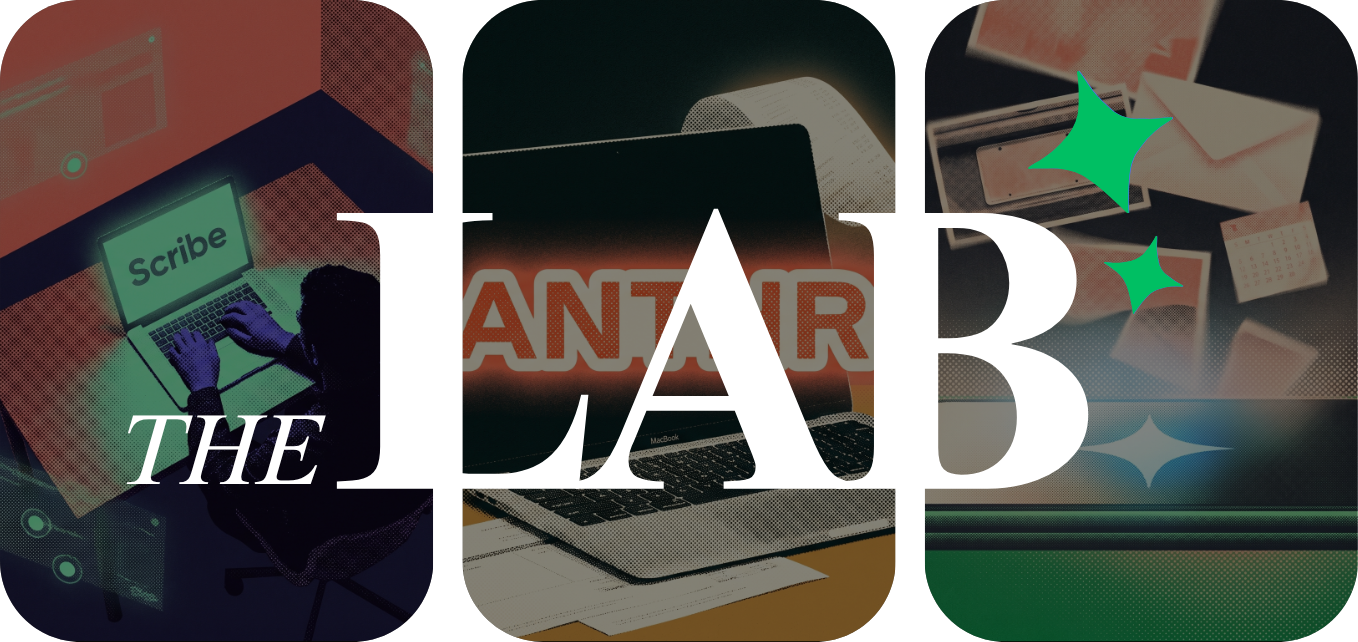
Scribe is a browser extension that sits on your laptop and silently watches you click through software. Then it turns everything into annotated step-by-step guides with screenshots and click instructions, automatically. Instead of spending an hour writing a how-to doc that nobody's going to read, Scribe just builds it for you.
Jennifer Smith founded the company in 2019 after years at McKinsey spent literally pulling up a chair behind employees and taking notes on what they clicked. She was convinced AI could do the same thing without the awkward hovering. Over 6 million employees now have Scribe installed on their laptops across 80,000 customers including LinkedIn, HubSpot, and T-Mobile.
People genuinely love it. One reviewer called it "a lifesaver" that saved hundreds of hours. The free tier captures browser-only activity and 600,000 organizations are on it. Paid plans start at $20/month and can record desktop apps too. Scribe hit $100 million in annual revenue in April at a $1.3 billion valuation. G2 reviewers flag occasional Chrome lag and slow sidebar loading, but the praise far outweighs the complaints.
Scribe's second product, Scribe Optimize, is where things get more interesting. It aggregates recordings across your entire organization and mines them for patterns. It found support reps at one company spending 400 hours copying and pasting between systems. At another, customer service was toggling through 20 tools just to answer "where is my order?" That's valuable for any operations team. It's also a comprehensive map of how everyone on your team does their job, and Smith sees that dataset eventually training AI agents to do the work themselves.
Smith says Scribe is "built to measure the work, not the workers" and keeps data anonymized at the team level. The company holds SOC 2 Type II certification and doesn't let AI providers train on customer data. Those are stronger privacy commitments than most tools in this category.
But Meta just showed everyone how fast those commitments can evaporate elsewhere. In April, Meta told employees it would log extensive activity on their work computers to train AI models. No opt-out. One engineer wrote internally that it "feels like an invasion of my privacy." Meta is also cutting 10% of its workforce while pouring $125 billion to $145 billion into AI. The company recording how you work and the company deciding which roles to cut turned out to be the same company.
Scribe isn't Meta. But the underlying data infrastructure looks familiar, and company policies change faster than privacy promises.

If you're installing Scribe yourself to document your own workflows, the free tier is excellent and worth your time today. If your company is rolling out Scribe Optimize across teams, ask what's being captured, who sees the analysis, and whether employees can opt out. The documentation product is one of the best available. Just make sure you know whether you're the one using it or the one being recorded.
PRODUCTIVITY
Anthropic built 15 back-office workflows into your existing subscription. We looked at whether they actually replace the admin grind.
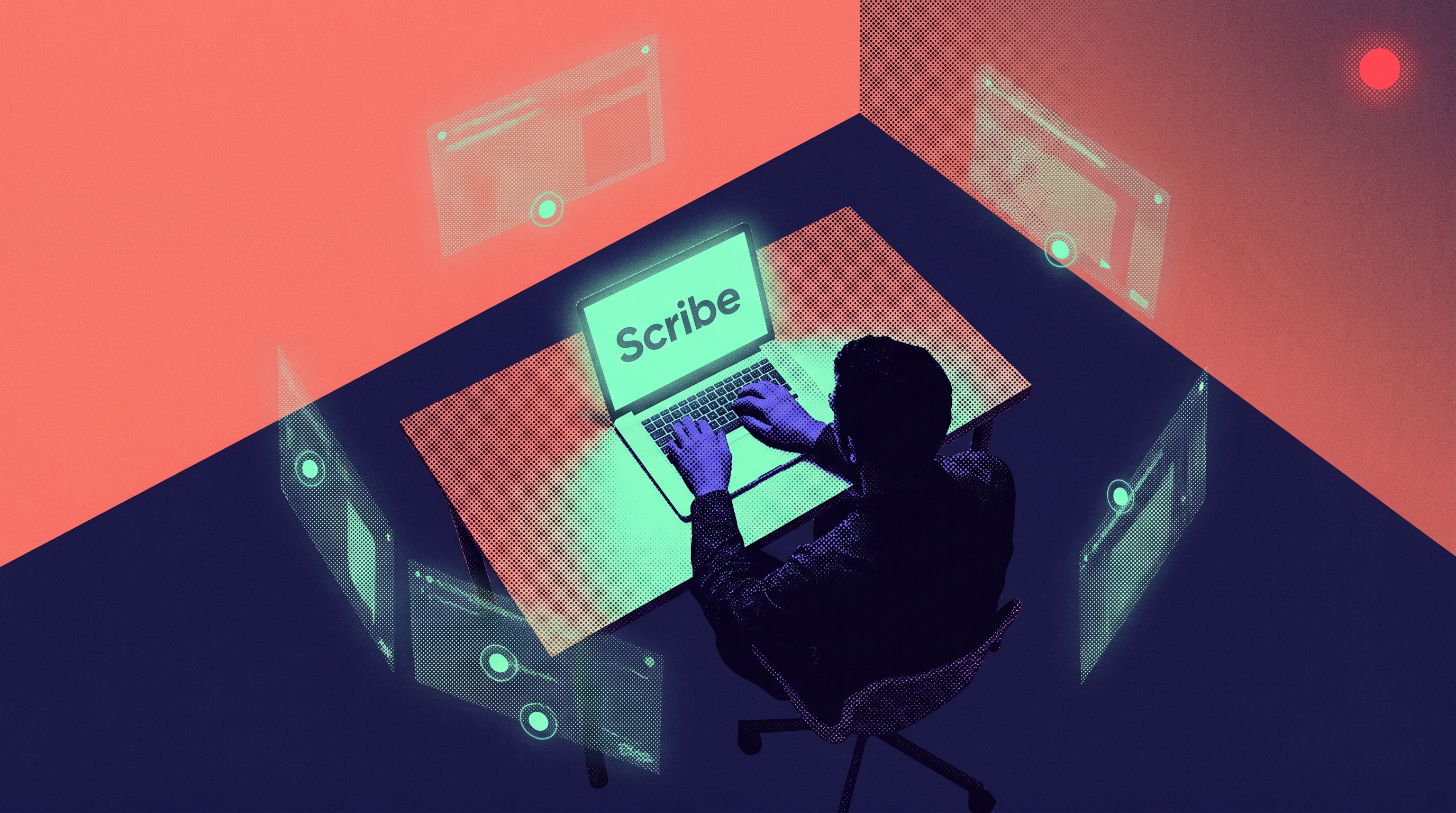
Anthropic launched Claude for Small Business on May 13, and the pitch is straightforward. Flip a toggle inside Claude Cowork, connect the tools you already use, and let Claude handle payroll planning, invoice chasing, book reconciliation, marketing campaigns, and employee onboarding. Fifteen workflows. Seven connectors including QuickBooks, PayPal, HubSpot, Canva, DocuSign, Google Workspace, and Microsoft 365. No extra fee beyond your existing $20/month Claude Pro subscription.
That last part is the whole story. Small business owners already spend a median $2,200 a year across five different AI tools. Claude is offering to collapse that entire stack into one subscription that costs $240 a year. For context, Intuit's own surveys found the top things small business owners want automated are expense management, invoicing, and payroll. Anthropic basically read the wish list and built the product.
Brian Ludviksen, COO of Purity Coffee, said Claude "showed me problems I didn't know I had." Mike Beckham, CEO of Simple Modern, put it more bluntly: "Hours of looking at stuff that doesn't matter are gone."
Those are early adopters, though, and this product is days old. The important caveat is that nothing sends, posts, or pays without your approval. Every workflow requires a human sign-off before it touches your real money or your real customers. That's the right call for a product connected to your QuickBooks, but as Forbes noted, approval fatigue is a real failure mode. The person this product is designed for is already short on hours. Adding fifteen workflows that each need babysitting could create a new kind of busy.
There's also the accuracy question. Research on frontier AI agents running real finance and accounting workflows shows even the best models pass fewer than half of those tasks correctly. Payroll planning and month-end close are exactly the workflows where a confident-sounding wrong answer costs you real money. Anthropic hasn't published accuracy data specific to these small business workflows, which is worth noting.
Compared to ChatGPT, which launched its own business tier back in 2024, Claude's advantage is the depth of integrations. ChatGPT Business doesn't connect directly to QuickBooks or chase your invoices.
If you run a small business and spend more than a few hours a week on invoicing, bookkeeping, or chasing payments, Claude for Small Business is worth turning on today. It's included in your $20/month subscription, the integrations hit the tools most small businesses actually use, and the human approval layer means it can't wreck anything without your sign-off. Just don't treat it as autopilot yet. Review everything it touches that involves money, and expect to spend the first week training it on how your business actually works.

ASSISTANT
Google wired Gemini into the operating system itself. Here's what that means for your data.
Google's head of Android told CNBC this week that Android is "transitioning from an operating system to an intelligence system." That's not marketing fluff. At the Android Show on Tuesday, Google unveiled Gemini Intelligence, and it's less of a feature update and more of a philosophical overhaul of what your phone actually does.
The basic idea is that instead of you opening apps and tapping through menus, Gemini handles the workflow for you. Give it a screenshot of a grocery list and it adds items to your cart in your shopping app. Describe a widget you want and it builds one on your homescreen. Tell it to book a spin class and it navigates the app, picks a front-row bike, and waits for your confirmation before checking out.
The autofill feature is where it gets personal. Gemini can now pull information from your Gmail, Google Photos, past Search queries, and YouTube history to fill out forms on your behalf. Google's own example is pulling your license plate number from a photo you took months ago. Helpful and unsettling in the same breath. Google says it's opt-in and you can turn it off anytime. Android Police's analysis was less generous, calling it a "privacy disaster." Geoffrey Fowler at The Washington Post raised the concern regarding "data bleed," where sensitive personal context from one area of your life inappropriately surfaces in another.
Before you get too excited or too nervous, know that most of this is rolling out only to 2026 flagships like the Galaxy S26 and Pixel 10. The hardware requirements are steep: 12GB of RAM minimum, flagship-class chips, and your phone manufacturer has to opt in. If you're carrying anything older, you're watching from the sidelines for now. The Chrome browsing features that let Gemini book appointments for you require a Google AI Pro subscription at $19.99/month, and the free tier caps you at 200 AI credits per month, which won't last long if you're using it for anything meaningful.
The competitive context matters too. Apple's WWDC is around the corner and Google clearly wants Gemini embedded in every corner of Android before Apple gets its AI story together. Whether that urgency is good for users or just good for Google's positioning is a fair question.
If you have a Galaxy S26 or Pixel 10, Gemini Intelligence is worth exploring this summer when features start rolling out. The task automation and custom widgets are genuinely useful. The autofill features are impressive but you should understand exactly what data you're exposing before flipping them on. For everyone else, this is a preview of where Android is headed, not something you can use today.
EVERYTHING ELSE IN AI
+ Anthropic now has more business customers than OpenAI for the first time ever, according to expense data from 50,000+ companies
+ OpenAI launched a $4 billion consulting company with McKinsey, Bain, and Capgemini to deploy AI inside big enterprises — valued at $14 billion on day one
+ Anthropic and xAI teamed up because Dario Amodei and Elon Musk trust each other more than they trust Sam Altman
+ A Texas couple is suing OpenAI after ChatGPT told their 19-year-old son it was safe to mix kratom with Xanax — he died of an overdose
+ Google killed the Chromebook and replaced it with the "Googlebook," an Android laptop where Gemini is baked into the cursor itself
+ GitLab is laying off staff and restructuring for the "agentic era" — the company is profitable and growing, but says its org chart was built for an era that's ending
+ Nvidia partners with DeepMind's former reinforcement learning lead to build AI that learns from experience instead of human data — his startup raised $1.1B in a seed round
+ Isomorphic Labs raised $2.1 billion to scale its AI drug design engine, backed by Alphabet, the UK Sovereign AI Fund, and Thrive Capital
OTHER TOOLS
+ Wispr Flow (sponsored): The new viral voice-to-text AI for iPhone and Mac that actually understands what you're saying every time
+ Superpower (sponsored): The health app that tests your blood and uses AI to tell you what's actually going on with your body before your doctor does
+ Adobe for Creativity: A new connector lets you control Photoshop, Illustrator, Premiere, and 50+ other Adobe tools directly from a Claude chat — describe what you want and the AI picks the right app, runs the edits, and hands you the finished file without you ever opening the software yourself
+ Canva AI 2.0: Canva rebuilt its entire platform around AI so you can now describe a full marketing campaign, presentation, or document in a prompt and it generates every piece — images, layouts, copy, and animations — in editable layers you can tweak, not just a flat image
+ Google AI Pointer: Google is turning your mouse cursor into an AI tool — point at anything on screen and ask Gemini about it, like hovering over a table of stats and saying "make this a pie chart," or selecting products on a page and asking it to compare them, starting now in Chrome
+ Adobe Acrobat AI: Acrobat's new productivity agent turns PDFs into interactive workspaces called PDF Spaces — drop in files, links, and notes, and it auto-generates summaries, audio overviews, and a custom AI assistant your recipients can chat with to find what they need
+ Weavable: Connects your HubSpot, Jira, Slack, Zendesk, and Notion into one layer that feeds AI agents the right context automatically — so instead of juggling five different integrations, your AI workflows pull from everything in one place and use up to 90% fewer tokens doing it
That's the Lab for this week. If a tool in here saved you time or wasted it, tell us — reply directly.
Written by Jason Chen, Advait Prakash, Andrew Hales, and the Thorium Valley crew.
That's all for today's Lab. See you next time.