


 ChatGPT Has 6 Plans Now. You're Probably on the Wrong One. ChatGPT Has 6 Plans Now. You're Probably on the Wrong One.
|
|
GPT-5.5 Writes Faster. Claude Writes Better. We Read Every Test.
|
|
Your $30/Month Workspace AI Mostly Just Chats
|
What else happened today?What AI tools should I be using?Good Morning Thorium Valley, welcome back to The Lab.
Today we're looking at the chatbot everyone uses that now has six pricing tiers, and figuring out if you're paying for the right one.
We're also putting two of the biggest AI writing models side by side to see which one actually writes better when it counts.
And we're checking in on those AI assistants baked into your work apps to find out if they do much beyond chat.
Quickly before we dive in — Be honest — how many AI tool free trials are you currently forgetting to cancel?

GENERAL
When ChatGPT Plus launched in early 2023, you had two options: Free or Plus. Clean, simple, done. In 2026, there are six tiers — Free, Go, Plus, Pro, Business, and Enterprise — with different rate limits, different context windows, silent model downgrades, and ads on two of them. It's genuinely confusing, and most people are either overpaying or getting quietly shortchanged.
Here's what actually matters across the tiers:
+ Free: Roughly 10 messages every five hours before the system silently switches you to a weaker model. No warning, no choice. Fine for occasional use, but the invisible downgrade means your answers get worse and you might not notice.
+ Go ($8/month): OpenAI launched this in India at ~$5/month and later expanded globally at $8. You get roughly 10× the free tier's message allowance — a massive jump. The catch: Go shows ads and doesn't include advanced reasoning models like o1 or o3.
+ Plus ($20/month): Fewer raw messages than Go, but adds advanced reasoning, custom GPTs, deeper research tools, no ads, and a 32K context window (roughly a 50-page document). For most people who use AI daily for work, this is the right call.
+ Pro ($200/month): 128K context window, much higher usage limits, and effectively unlimited standard messages — though Deep Research and Sora still have caps. But Jessica Lin, who tested Pro for a month, went back to Plus and "couldn't tell the difference in my daily use. That's $180/month I got back."
The pattern nobody talks about is the silent downgrade. On non-Business plans, when you hit your usage limit, the system automatically switches you to a mini model. You don't get asked. It just happens. Your answers get worse mid-conversation, and unless you're paying close attention, you'll never know.

If you use AI a few times a week, free is fine and Go at $8 is generous for the price even with the ads. If AI is part of your daily work, Plus at $20 is the sweet spot and honestly comparable to Claude Pro at the same price, which many users report handles long-form writing and large documents particularly well. Pro at $200 is only worth it if you're running complex research or coding sessions for hours a day and regularly hitting Plus limits. Most people aren't. Pick Plus, and if you find yourself caring more about writing quality or working with long documents, try Claude instead.
WRITING
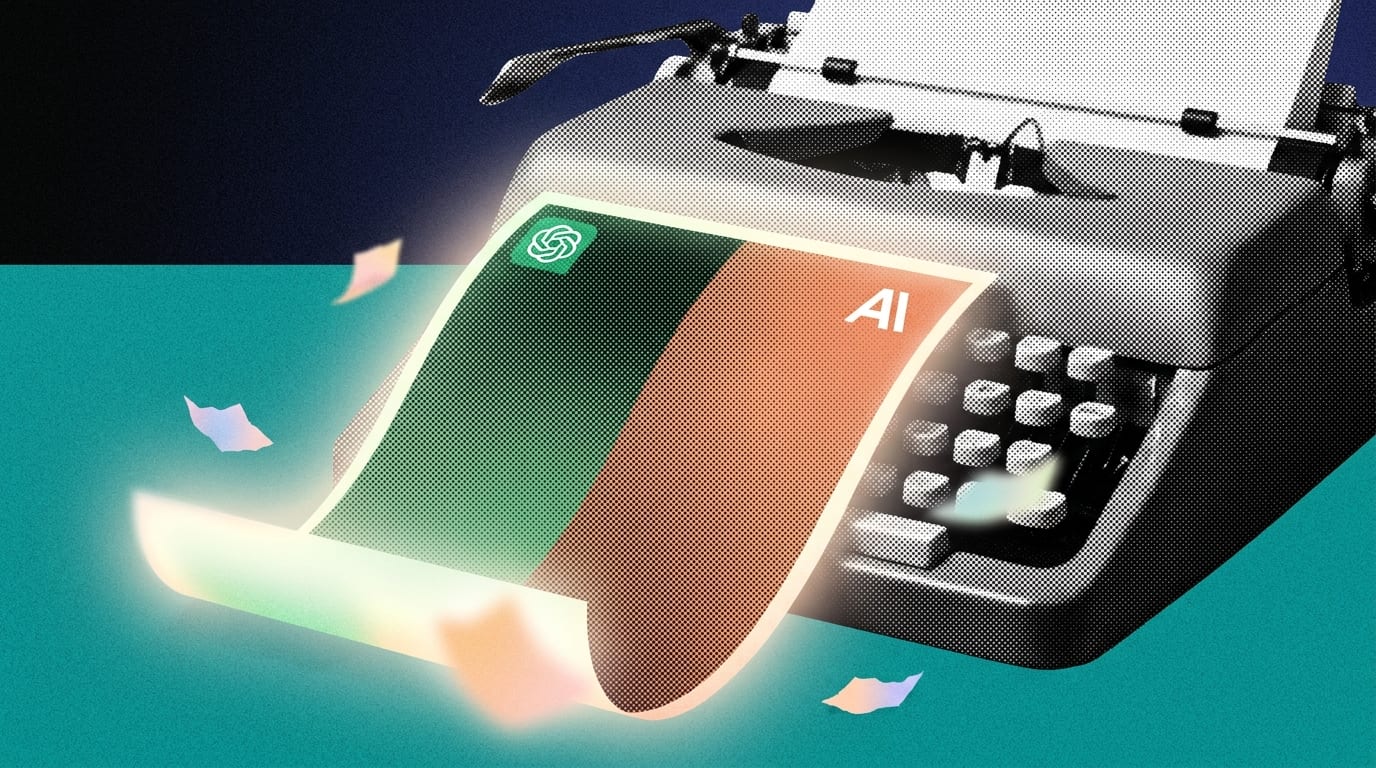
OpenAI's newest model dropped 11 spots when tested on creative writing. Here's what that means for your next draft.
GPT-5.5 is optimized for reasoning and speed — and it shows. Matt Shumer, CEO of HyperWrite, called it more productive than ever for complex tasks but said GPT-4.5 is still the better writer. On Arena.ai's overall rankings, GPT-5.5 sat around #10 at the time of writing. Switch to creative writing specifically and it fell to #21, with Claude models holding the top spots.
That gap shows up in real work. Content professional Sarah Hornik ran GPT-5, Claude Opus 4.1, and Gemini 2.5 through identical tasks for a fictional SaaS company. For a 2,000-word blog post, Claude produced a near-target, well-flowing draft while GPT-5 came in short and copied source material she'd told it not to use. But when she tested marketing copy — landing pages, Facebook posts, email campaigns — GPT-5 crushed it. Her verdict: "GPT-5 for landing pages and social posts, Claude for blog posts and articles."
The pricing adds a twist. GPT-5.5's API charges $30 per million output tokens versus Claude's $25. But GPT-5.5 can complete complex tasks more efficiently, often using far fewer tokens overall — meaning the model with the higher sticker price can actually be cheaper per finished piece, depending on the task. For most people paying $20/month for ChatGPT Plus or Claude Pro, though, the API math doesn't matter. Output quality does. And there, the models have genuinely diverged.
Across several independent tests, GPT-5.5 has been strong for short-form marketing copy, ad headlines, social posts, and emails. If you write blog posts, articles, research summaries, or anything longer than a few paragraphs, Claude tends to produce noticeably better prose and more faithfully follows your instructions. The "best AI for writing" is now permanently a question about what kind of writing you're doing. Pick accordingly.
PRODUCTIVITY
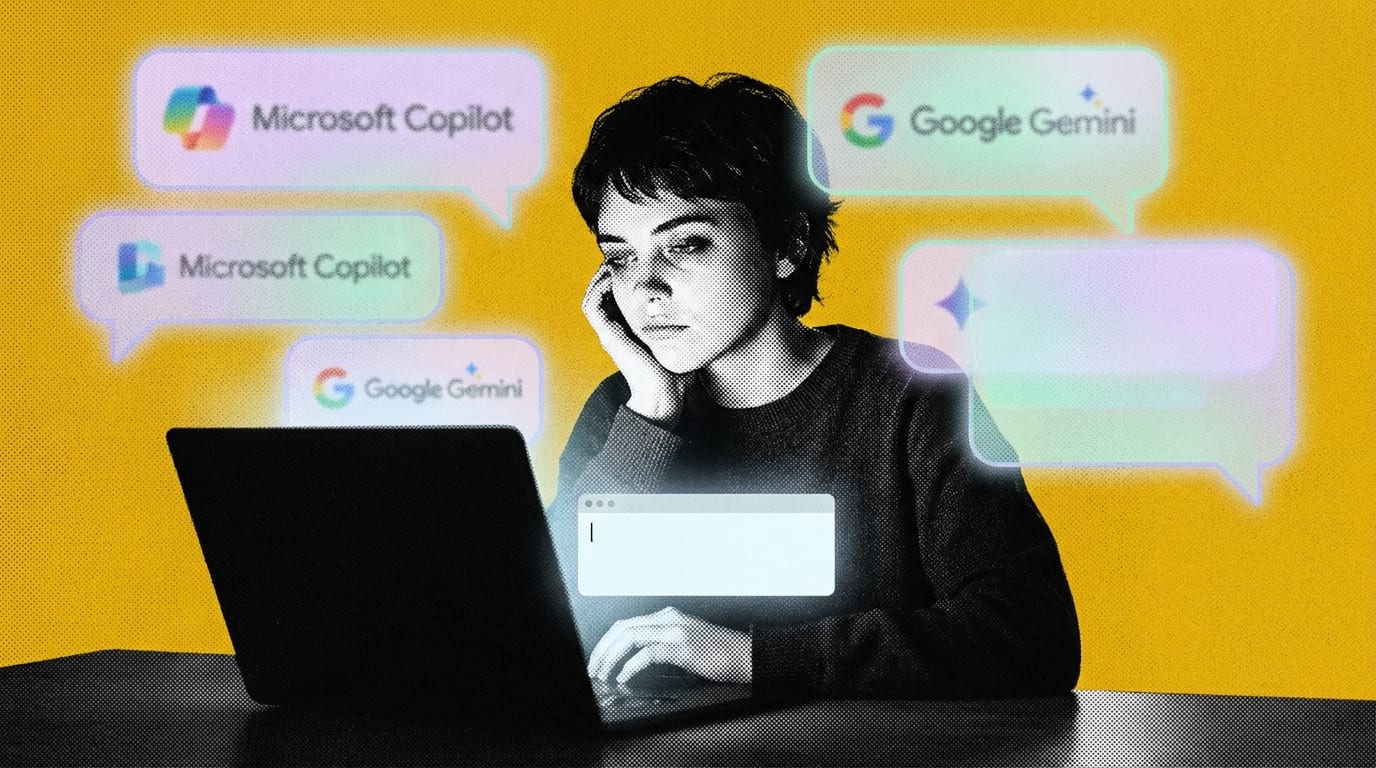
Microsoft Copilot costs $30/user/month on top of your existing 365 license. Google Gemini for Workspace runs about $20/user/month on top of existing plans. Both promise AI inside every app you use for work. Both deliver it in maybe two or three of them.
Copilot in Outlook is genuinely good — summarizing threads, drafting replies, catching you up on chains you missed. Users on r/microsoft_365_copilot consistently say the same thing: Outlook is the one place where Copilot actually works. Open Word or Excel and it's basically a chat window bolted to the sidebar.
Gemini has a similar unevenness. It's solid in Gmail and Docs for quick drafts and summaries, but Gemini in Sheets still can't reliably do calculations, and Slides is mostly an image generator pretending to be a presentation tool. It also recently had a bug where your chat history would vanish — not exactly confidence-inspiring for a productivity tool.
This mediocrity is partly by design. Both companies throttle their own AI to minimize liability, so you get features that demo beautifully at keynotes and feel hollow at your desk. Microsoft's own VP of Modern Work, Jared Spataro, admitted that Copilot is "genuinely transformative for about 30 percent of our workforce and marginally useful for another 40 percent." That's Microsoft publicly telling you their flagship AI product doesn't meaningfully help most of the people using it.
The deployment pattern backs that up. One CTO at a major asset manager described the arc to LinkedIn consultant Nick Finlay: excitement in weeks one and two as people try meeting summaries, confusion by weeks three and four, then usage drops off. They expected employees to figure it out on their own — and that was naive.
If your company already pays for Copilot, use it in Outlook and Teams. That's where it earns its keep. If you're on Google Workspace, Gemini in Gmail and Docs is useful for drafting and summarizing but don't expect it to replace a real spreadsheet brain. For anything requiring actual reasoning or working with long documents, paste your work into Claude and get a real answer. Neither tool is bad. They're just not what the sales deck promised.

EVERYTHING ELSE IN AI
+ Anthropic secretly embedded tracking code in Claude to catch Chinese firms stealing its AI — Alibaba found out and banned it company-wide
+ Google quietly changed your privacy settings so your photos, files, and voice recordings now train its AI unless you opt out
+ The UN's deadline to ban killer robots expired this week no treaty exists, and the one AI company that tried to say no got punished by the Pentagon
+ Stanford found that AI models agree with users 49% more than humans do and people trust the sycophantic versions more
+ China's new AI companion rules take effect July 15, andByteDance and Alibaba are already shutting down their humanlike agents to comply
+ Sysdig documented thefirst fully autonomous AI ransomware attack an AI agent hacked a database, encrypted it, and demanded payment in seconds with no human involved
+ Meta is reportedly spending $6.5 billion with Samsung to build its own AI chips, ditching its longtime manufacturer TSMC
+ 9 out of 10 people say they can't tell what's real online anymore because of AI, up sharply from last year

OTHER TOOLS
+ Wispr Flow: *(sponsored)*: The new viral voice-to-text AI for iPhone and Mac that actually understands what you're saying every time
+ Superpower: *(sponsored)*: The health app that tests your blood and uses AI to tell you what's actually going on with your body before your doctor does
+ Gemini Omni Flash: Google's new video API lets developers generate a clip and then edit it in natural language turns — change a character, adjust a camera angle — without regenerating from scratch, a first for any video generation API
+ Grok Voice Agent Builder: xAI launched a no-code platform that lets businesses set up production voice agents powered by Grok in under two minutes, with built-in phone lines, guardrails, and analytics
+ MiniMax MCP: The company behind Hailuo video shipped an MCP server that lets you generate voice clones, images, and videos from inside Claude Desktop, Cursor, or Windsurf through simple text prompts
+ Otari: Mozilla.ai released an open-source control plane that lets teams route requests across multiple LLM providers, set spending limits, and auto-failover when a model goes down — all from one endpoint
+ Leanstral 1.5: Mistral released an open-source model purpose-built for writing and verifying formal math proofs — it solved 587 of 672 Putnam competition problems and runs with only 6 billion active parameters
That's the Lab for this week. If a tool in here saved you time or wasted it, tell us — reply directly.
Written by Jason Chen, Advait Prakash, Andrew Hales, and the Thorium Valley crew.
That's all for today's Lab. See you next time.