

 This App Turns Your Voice Into Text That Actually Sounds Like You This App Turns Your Voice Into Text That Actually Sounds Like You
|
|
Gemini's Best Feature Isn't the Chatbot
|
|
Your AI Subscriptions Cost $847 a Month. You Use Six of Them.
|
What else happened today?What AI tools should I be using?Good Morning Thorium Valley, welcome back to The Lab.
Today we're testing a dictation app that says it can listen to you talk and produce text that actually sounds like you typed it.
We're also looking at whether Google's AI is secretly more useful buried inside your existing apps than it is as a standalone chatbot.
And we're pulling up the credit card statement, because the amount you're spending on AI tools you forgot you subscribed to is probably going to hurt.
Quickly before we dive in — Be honest — how many AI tool free trials are you currently forgetting to cancel?
PRODUCTIVITY
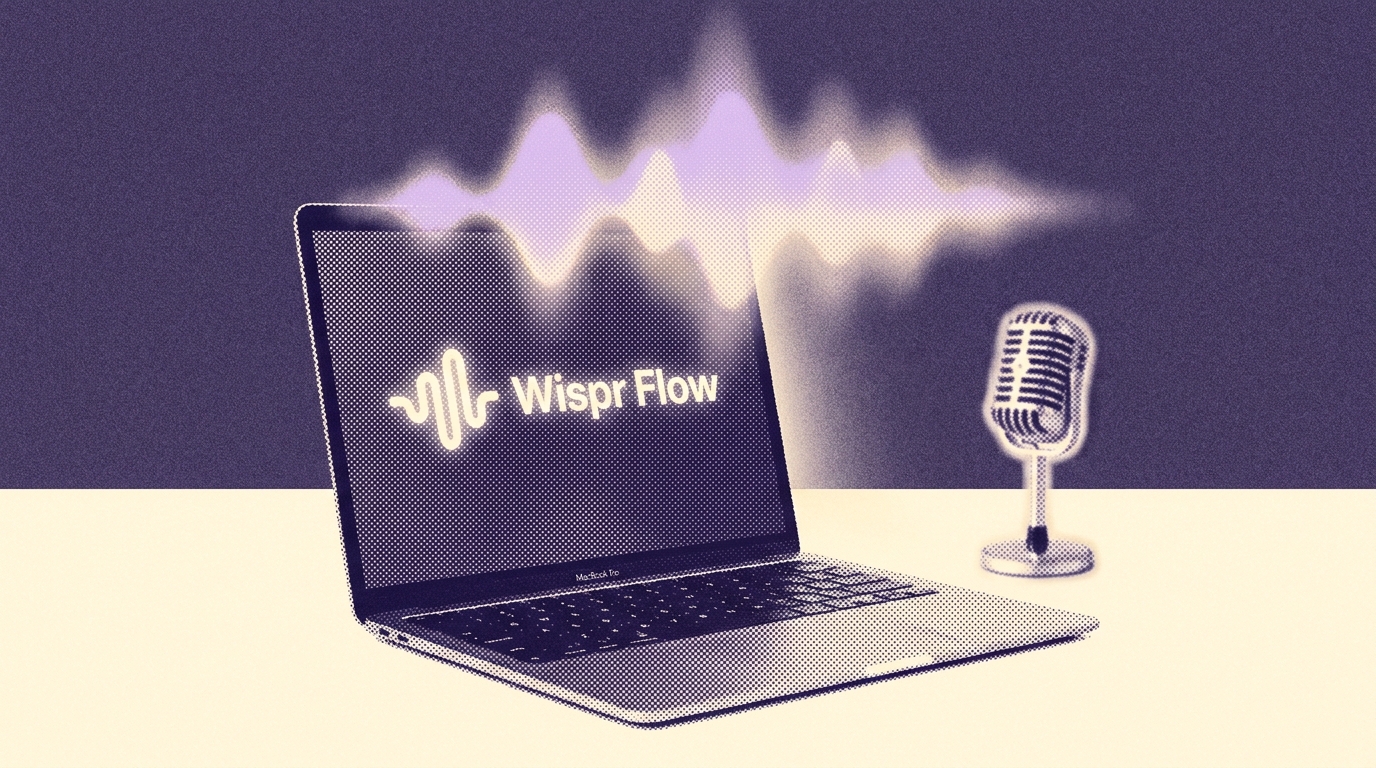
Wispr Flow is a dictation app for Mac that listens to you talk and produces text that reads like you typed it. Hold the Fn key, speak naturally, release, and the text appears — in any app, from Slack to Google Docs to code editors, in over 100 languages.
The pitch sounds like every voice tool you've tried and abandoned. What makes Flow different is tone matching. It studies how you write in different contexts and adjusts accordingly. Your Slack messages sound like your Slack messages. Your emails sound like your emails. One developer who tested it extensively reported dictating at nearly double his typing speed with what he called "essentially perfect" accuracy.
The small details are where it gets interesting:
+ Self-correction: Say "let's meet at 5pm, actually make that 6pm" and Flow just writes "let's meet at 6pm." No cleanup needed.
+ Command mode: Highlight text and say "make this crisper" without copying anything into Claude or ChatGPT.
+ Real speed gains: Wispr CEO Tanay Kothari said the average user cuts daily typing from five hours to three, and 72% of power users' computer activity eventually runs through Flow.
Rahul Vohra, the CEO of Superhuman, called it "the best AI product I've used since ChatGPT."
Not everyone agrees. Flow holds a 2.6 out of 5 on Trustpilot while scoring 4.8 on the App Store — a gap that suggests the people who love it really love it, and the people who don't have specific gripes worth hearing. The biggest one is privacy: your audio streams to the cloud by default. Competitors like Superwhisper process everything locally. Wispr says data sharing is opt-in, but if you're handling sensitive information, the cloud dependency is worth knowing about.
Pricing is $10 a month for Pro. Apple's built-in dictation is free but widely considered mediocre beyond short texts. The free tier gives you a feel for it.

If you write more than an hour a day on a computer, Wispr Flow is worth trying. The tone matching is real, the speed gain is significant, and the self-correction feature alone saves more editing time than you'd expect. Skip it if you need everything processed locally or if your work involves sensitive audio you can't send to a server. For everyone else, especially anyone who thinks faster than they type, this is the rare productivity tool that actually changes how your day feels.

PRODUCTIVITY
Google's AI works best when you forget it's there.
Gemini as a standalone chatbot is fine — CNET's Imad Khan called it better than ChatGPT Plus overall. But that's not really the point. The thing that actually makes Gemini worth paying for is how it lives inside the Google apps you already use.
One user on r/GeminiAI described the Workspace integration as "the silent killer feature ChatGPT can't match." No flashy demo, no viral moment — just the ability to pull from your Drive, understand your Docs, and create new files without leaving the conversation. SEO consultant Marie Haynes tested this with client work and said a single prompt — asking Gemini to surface observations from a recorded Meet call — saved her about two hours. It pulled specific notes from the transcript, then offered to start follow-up research on the spot. She later used it to draft an entire article by pointing Gemini at her own files and the open web simultaneously, calling the result "very, very good." That kind of first-party access to your work files is something ChatGPT and Claude simply can't match right now.
The problem is getting there. Google's licensing is genuinely confusing:
+ The standalone Gemini Business add-on was discontinued in early 2025, and Gemini features got rolled into Business Standard and Business Plus plans. That means enabling Gemini typically requires upgrading your entire org's Workspace edition — you can't just flip it on for one person.
+ The workaround is having that person subscribe to Google AI Pro at $19.99/month on a personal account, but then they lose the corporate Drive and Gmail integration, which is the whole point.
+ For individual users, that same Google AI Pro plan includes 5TB of storage, Deep Research, custom Gems, NotebookLM with higher limits, and Gemini baked into Docs and Gmail. If you already needed the storage, you're effectively paying about $10 for the AI upgrade.
One annoyance worth noting: Khan flagged that Gemini sometimes quietly switches you to the cheaper Flash model during high traffic without telling you, which stings when you're paying for Pro.
In our experience, if you want raw chatbot quality for standalone use, Claude is the better pick. Gemini's strength is context, not conversation.
If your work already runs on Google Workspace, Gemini is worth the upgrade because no other AI tool offers the same first-party, built-in integration with your Drive, Meet, and Docs. If you're a solo user who needs the storage anyway, the $19.99/month Google AI Pro plan is an easy yes. Skip it if you're on a small team where enabling Gemini may require upgrading everyone's Workspace edition, or if your work doesn't live in Google's ecosystem. The AI itself is good. The integration is great. The licensing is a mess.
PRODUCTIVITY
Open your credit card statement right now. Count the AI charges. If you're like most people, you'll find more than you expected.
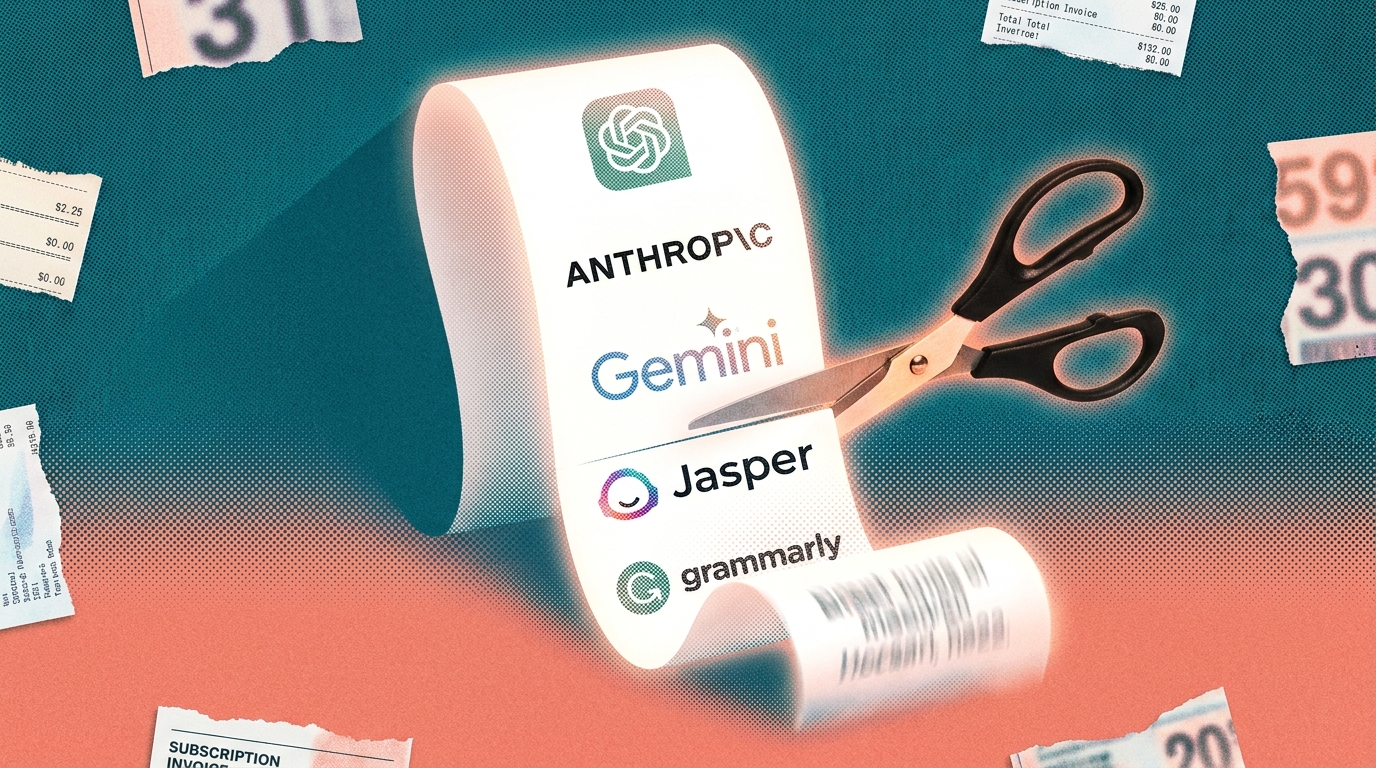
An audit of 50 small businesses conducted between January and March 2026 found the average team pays $847 a month across 17 AI tools. They use six of them daily. The other eleven sit there, billing quietly, forgotten between invoices. That's over $10,000 a year on subscriptions nobody budgeted for.
The overlap is where the real money burns. That same audit found teams paying for ChatGPT, Claude, and Gemini simultaneously — three assistants that handle most of the same workloads. Writing tools are even worse: Jasper plus Copy.ai plus Grammarly plus ChatGPT equals four subscriptions solving one problem. The auditors estimated that 60 to 75% of the average AI spend is recoverable without losing any real capability.
And this isn't just a small business problem:
+ Zylo's 2026 SaaS Management Index found that 78% of IT leaders at large companies reported unexpected charges tied to AI features, with enterprise AI spend jumping 108% year over year.
+ A TechCrunch report found that heavily AI-invested firms spend $7,500 per employee per month on AI tooling.
The fix takes about an hour. Pull 90 days of card statements and tag every AI tool as keep, consolidate, or kill. Cancel the kill list before you close the laptop. The newsletter The AI Corner recommends what they call the "1+2 model": one main platform plus one or two specialized tools. That's it.
If you haven't audited your AI subscriptions in the last 90 days, you are likely paying for tools that duplicate each other. Pick one general-purpose assistant (in our experience, Claude handles the widest range of work), keep the one or two specialty tools you actually open every week, and cancel everything else today. Repeat every quarter because the subscriptions tend to creep back. In our experience, the teams winning with AI right now aren't the ones with the most tools. They're the ones who picked three and actually learned them.

EVERYTHING ELSE IN AI
+ Microsoft's AI chief calls Anthropic "really, really dangerous" for speculating that Claude might be conscious
+ Art Directors Guild slams Martin Scorsese for promoting AI storyboarding tool built on "work likely stolen" from artists
+ Google claims YouTube's terms of service already gave it permission to train AI on every song uploaded to the platform
+ Over 10,000 Mississippi residents sue xAI and SpaceX over constant noise from data center turbines in their neighborhood
+ Meta is housing AI servers in giant tents because it can't build data centers fast enough
+ The world's first AI-designed vaccine has been tested in humans for the first time
+ Musicians sue Universal and Warner for licensing their recordings to AI music companies without paying them
+ AI drove 40% of U.S. job cuts in May as employers slashed 97,000 positions
OTHER TOOLS
+ Wispr Flow (sponsored): The new viral voice-to-text AI for iPhone and Mac that actually understands what you're saying every time
+ Superpower (sponsored): The health app that tests your blood and uses AI to tell you what's actually going on with your body before your doctor does
+ Gemini Live Translate: Google's new translation model lets you have a real-time conversation with someone who speaks a different language — it listens, translates, and speaks back in over 70 languages without awkward pauses
+ Claude Managed Agents: You can now schedule Claude agents to run automatically on a timer — think nightly data syncs, weekly reports, or daily digests that just show up without you lifting a finger
+ Close CRM: The sales CRM launched Chloe, an AI agent that lives inside your pipeline and handles calls and outreach for you — it already made 818,000 calls for businesses during beta
+ Dovetail: The research platform's AI chat now remembers everything from your entire conversation, so follow-up questions like "why?" or "break that down by quarter" actually build on previous answers instead of starting from scratch
+ Hostinger: Hostinger now lets anyone set up a personal AI agent that learns from your past interactions and gets smarter over time — no coding required, and you can control it from Telegram
That's the Lab for this week. If a tool in here saved you time or wasted it, tell us — reply directly. Written by Jason Chen, Advait Prakash, Andrew Hales, and the Thorium Valley crew. Got a tool you want us to review? Reply with the name and we'll put it on the list.
Written by Jason Chen, Advait Prakash, Andrew Hales, and the Thorium Valley crew.
That's all for today's Lab. See you next time.