

Lab — June 16, 2026

In partnership with

In Today's Newsletter
Inside Apple's Rebuilt Siri
Notion Costs More Now. It Might Also Replace Five of Your Tools.
One of These AI Design Tools Could Get You Sued
What else happened today?What AI tools should I be using?

Good Morning Thorium Valley, welcome back to The Lab.

Today we're looking at whether the voice assistant everyone wrote off years ago actually deserves a second chance after a full rebuild.

We're also figuring out if a workspace tool that just raised its price might actually replace five other apps you're paying for.

And we're breaking down which AI design tools have your back if you get sued and which ones leave you on your own.

IN THIS ISSUE 1. Inside Apple's Rebuilt Siri 2. Notion Costs More Now. It Might Also Replace Five of Your Tools. 3. One of These AI Design Tools Could Get You Sued

Quickly before we dive in — Be honest — how many AI tool free trials are you currently forgetting to cancel?

Inside Apple's Rebuilt Siri

GENERAL

Inside Apple's Rebuilt Siri
Share X in

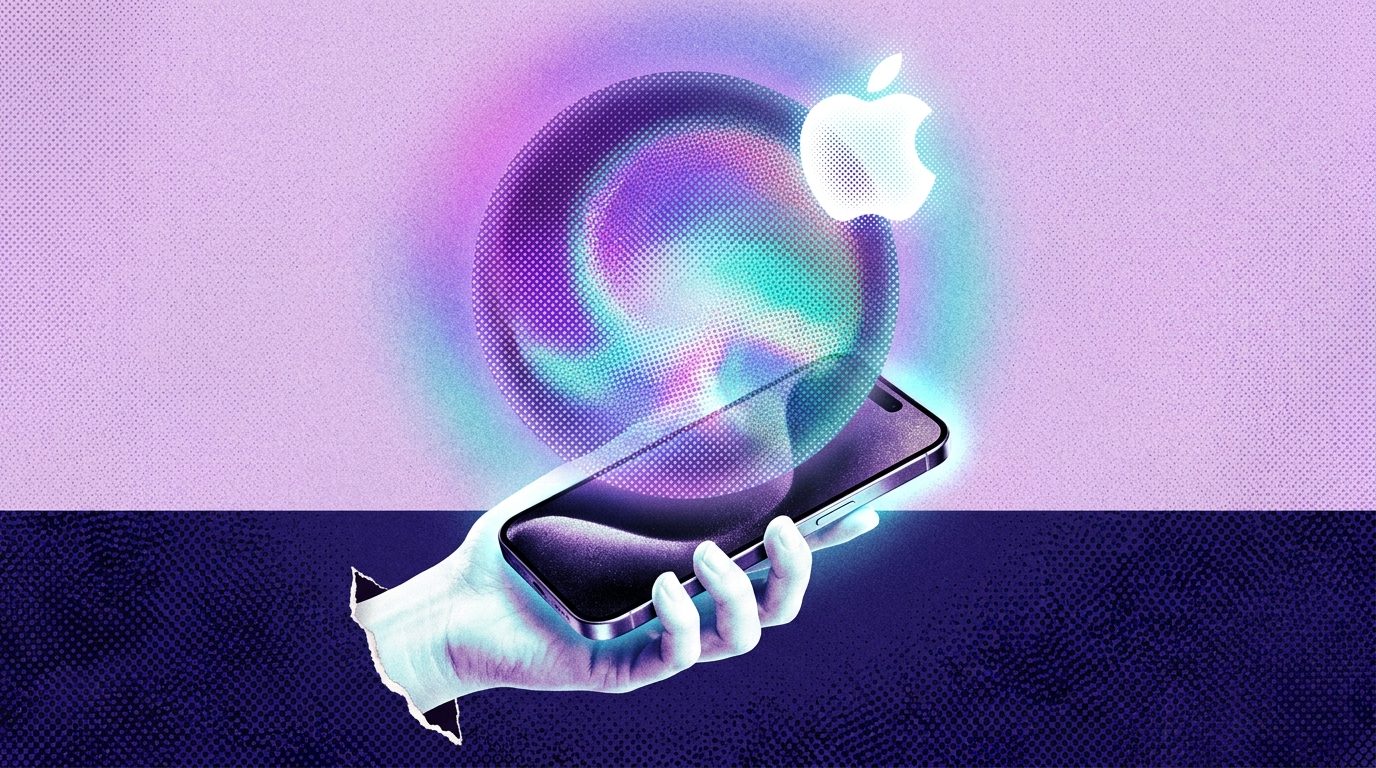
Apple's Siri has long been a punchline in tech. Ask it anything beyond setting a timer and you'd get a web search or a polite apology. So when Apple announced at WWDC that it had completely rebuilt Siri from the ground up, skepticism was the natural reaction. But early hands-on reviews are saying something unexpected: it works.

The key detail is that Apple didn't bolt new features onto the old Siri — they scrapped it. Craig Federighi, Apple's SVP of Software Engineering, said at WWDC they rebuilt Siri on "a new foundation," powered by Apple's own models as part of Apple Intelligence, with optional OpenAI ChatGPT integration for certain queries.

What does that mean in practice? Reviewers and Apple have shown off capabilities the old Siri would have fumbled completely:

+ Ask which podcast a friend recommended and Siri pulls the answer from a text message, then plays it

+ Use the camera to ask Siri visual questions about what it sees, like helping choose between items

+ Perform multi-step actions across apps — extracting items from an email into Notes and creating a reminder in one request

+ Find a friend's new address from a text mention and build a driving route around it

The privacy angle is genuine. Apple Intelligence runs on-device or through Apple's Private Cloud Compute, where requests are processed securely and never retained or used for training. That's a real differentiator from competitors where user interactions have historically helped improve models.

Now the catches:

+ You need an iPhone 15 Pro or later

+ It's launching in beta this fall, U.S. English only

+ If you live in the EU, Apple Intelligence will be delayed — Apple blames the Digital Markets Act, though EU officials say nothing in the DMA prohibits the launch

Bloomberg's framing feels right: this is "just good enough to ease its AI crisis." Apple isn't leading the pack. It's finally joining the race.

The Verdict

If you have a recent iPhone and live outside the EU, Siri looks like it could genuinely save you time on the kinds of small tasks that add up throughout the day. For users with supported devices, Apple Intelligence is included with OS updates at no extra cost, it's built into your phone, and Apple claims its privacy model is uniquely strong among AI assistants. If you need a serious AI thinking partner for writing, research, or complex work, tools like Claude or ChatGPT are generally better suited today. Siri isn't trying to replace those. It's trying to make sure you never have to open them for the simple stuff. And for the first time, that actually seems plausible.

AI help, without the trust tax.

Most AI tools ask you to trade your data for intelligence. Norton Neo doesn't. It's the first safe AI-native browser built by Norton, and it gives you powerful built-in AI without handing your privacy over to get it. Search, summarize, and write with AI built directly into your browser. Your data stays yours. Your context stays private.

Built-in VPN, anti-fingerprinting, and ad blocking come standard. No add-ons. No setup. No compromises.

Fast. Safe. Intelligent. That's Neo.
Notion Costs More Now. It Might Also Replace Five of Your Tools.

PRODUCTIVITY

Notion Costs More Now. It Might Also Replace Five of Your Tools.
Share X in

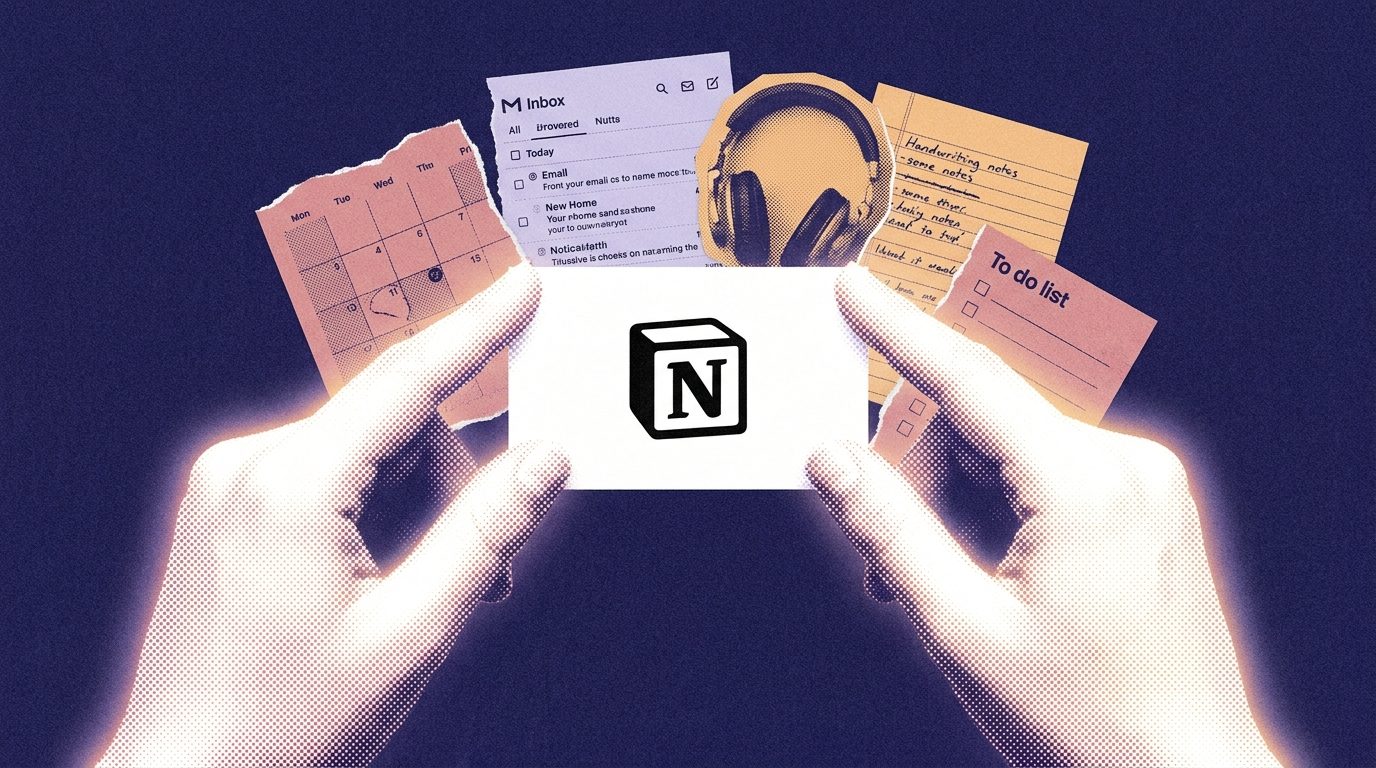
Notion used to be a notes app with a database trick up its sleeve. Now it's a workspace with autonomous AI agents, an email client, and a meeting transcription tool. The price went from $15 to $20 per user per month, and the AI features that used to be a $10 add-on now only come with Business tier or above.

The pitch is consolidation — Notion says the $20 seat replaces your AI writing tool, your meeting notes app, your project tracker, your wiki, and your calendar app. Ramp reportedly cut productivity tool costs by 70% after going all-in. And customers have built over 1 million Custom Agents in just 11 weeks. That's real adoption, not a press release.

The agents are the headline feature. You can tell Notion's AI to build a database, update pages, or pull information from Slack or Google Drive — and it just does it. It's the closest thing to an AI teammate most small teams have access to right now.

But there's a second price tag most people haven't noticed. Custom Agents started consuming credits on May 4 at $10 per 1,000. For a team running hundreds of agents, that meter could easily outpace the seat cost. Notion's bill is no longer a fixed number you can predict.

And the newer features still have rough edges:

+ Meeting Notes scored 86.8% accuracy in testing — fine, but it can't identify who's speaking. If you need speaker labels, Otter or Granola still win.

+ Notion Mail is free with useful AI filtering, but integration with the rest of Notion is surprisingly shallow. You can't turn emails into database tasks yet, though Notion says that's coming.

+ Performance and bugs: Large workspaces still get slow, and automation bugs flagged since 2022 remain unfixed.

The honest pattern is clear: power users who fully commit love it. The median user admits they touch the AI features maybe twice a month. Notion is betting that the hype cycle settles into utility — and for committed teams, it is. For everyone else, it's a price hike on a notes app.

The Verdict

If your team already lives in Notion and you're paying separately for a meeting tool, an AI assistant, and a calendar app, the $20 Business plan probably saves you money. If you just use Notion as a wiki and never asked for AI agents, you're now subsidizing a platform you didn't sign up for. For personal use or small teams who want strong AI without the workspace overhead, Claude Pro at $20 a month does more thinking per dollar. Notion bet that the hype cycle would settle into utility. For committed teams, that bet is paying off. For everyone else, it's a price hike on a notes app.

No theory. No slides. Just pipeline.

Most founders know their product. Few know how to get it in front of the right people. In this hands-on session, Clay + HubSpot for Startups walk you through ICP definition, prospect list enrichment, and AI-personalized outreach. You launch your first sequence before the session ends. June 18. 11am ET / 4pm GMT.
One of These AI Design Tools Could Get You Sued

DESIGN

One of These AI Design Tools Could Get You Sued
Share X in

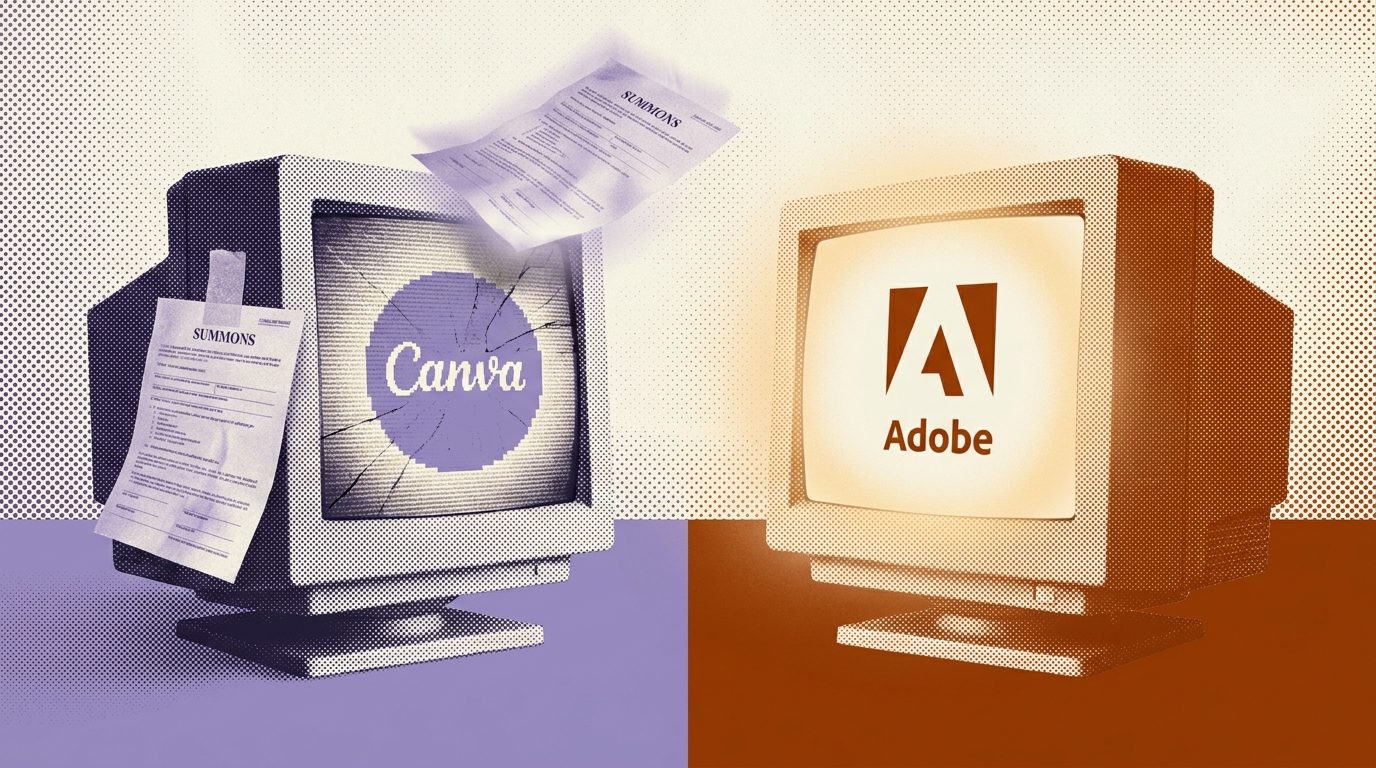
Getty Images sued Stability AI for scraping 12 million photos. Artists filed a class-action suit against Stability AI and Midjourney for copyright infringement. The legal environment around AI-generated images isn't theoretical anymore — and if you're using these tools to make content for work, who's liable when something goes wrong is worth about five minutes of your attention.

Adobe Firefly and Canva AI both let you generate images from text prompts, remove backgrounds, and expand photos. On features alone, Canva wins for speed and ease, Adobe wins for polish and photorealistic detail. For a LinkedIn graphic or slide deck, either works. The part most people skip is what happens after you hit download.

The difference comes down to training data and legal cover:

+ 

Adobe Firefly was trained on Adobe Stock, public domain content, and properly licensed material. Adobe's General Counsel Dana Rao put it plainly: "If you do get sued on a Firefly-generated output, we're going to step in and indemnify you. We know where we got our work from." That indemnification is baked into enterprise agreements.

+ 

Canva's AI pulls from DALL-E and Google Imagen. Its indemnification program, Canva Shield, only kicks in for eligible business and enterprise plan customers. If you're on the free plan or even Canva Pro, you're not covered — meaning most freelancers and small teams are on their own.

Pricing is straightforward. Canva Pro runs $15/month with AI features included. Adobe bundles Firefly generative credits with most Creative Cloud plans, so if you already pay for any Creative Cloud app, you get Firefly credits built in. Canva is the better deal for templates and quick social posts. Adobe is the better deal if you need images you can actually use in a client deliverable without worrying about a cease-and-desist letter.

The Verdict

If you're making internal slides or social posts that nobody's going to sue over, Canva is faster and easier. If you're a freelancer delivering work to clients, or you're on a marketing team producing commercial assets, Firefly's licensed training data and indemnification aren't optional extras. They're the whole point. The legal landscape around AI imagery is still being written, and right now, Adobe is one of the few major design tools that will pick up the tab if something goes wrong.

In Other News

EVERYTHING ELSE IN AI

What else happened today?

+ Commerce Department forced Anthropic to kill its best AI models days after launch — and the jailbreak excuse may have been a cover story

+ A one-click Microsoft Copilot attack could silently steal your emails, passwords, and files through a single link

+ Google is raising $85 billion with Berkshire Hathaway writing a $10B check — just to keep up with AI infrastructure costs

+ Nvidia found a backdoor into China: selling CPUs instead of banned GPUs, with orders opening as early as August

+ Meta told 6,000 employees its internal AI costs are heading toward billions — time to stop "tokenmaxxing"

+ States are ignoring Trump's warning not to regulate AI and passing their own laws anyway

+ A Munich court ruled Google is liable for false claims made by AI Overviews — disclaimers won't save you

+ A Roblox cheat script downloaded by an employee led to a major security breach at Vercel

AI Tools

OTHER TOOLS

What our editors are paying attention to today

+ Wispr Flow: *(sponsored)*: The new viral voice-to-text AI for iPhone and Mac that actually understands what you're saying every time

+ Superpower: *(sponsored)*: The health app that tests your blood and uses AI to tell you what's actually going on with your body before your doctor does

+ Cursor: The AI coding editor now has a Design Mode that lets you click, draw, or speak changes to a website's look while the AI builds it — no need to describe what you want in text anymore

+ ElevenLabs: The voice AI platform now lets you create talking-head videos with lip-synced AI avatars, so you can go from script to polished presenter video without a camera or actor

+ Facebook: Meta added an AI Mode to Facebook search that pulls answers from what real people are saying in Groups and Reels instead of giving you generic links

+ 1Password: The password manager launched Credential Broker, which gives AI agents and automated tools access to only the specific login they need, exactly when they need it — instead of leaving passwords scattered across your company's code and files

+ Coach: A new AI review service that critiques your product docs, strategy decks, and roadmaps — and now works as a plug-in for coding tools like Cursor and Claude Code so your AI assistant can get a second opinion mid-workflow

That's the Lab for this week. If a tool in here saved you time or wasted it, tell us — reply directly.

Written by Jason Chen, Advait Prakash, Andrew Hales, and the Thorium Valley crew.

That's all for today's Lab. See you next time.